
Members Memories
Members of the Cossitt Family Association are
given an opportunity in this section of our website to say a few words
about a deceased Cossitt relative that are of interest to all who read
this section.
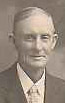
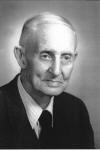 Harlow Hopkins Cossitt (b September 21,1860 Pompey Hill, NY, d November 29, 1952 Hanford,
CA)
We all know that baseball is an
American creation. According to the Ken Burns documentary on
baseball that was broadcast on PBS, it got its structure and beginnings
from a game played by young men and boys in Syracuse, NY called
TOWNBALL. As a child, I remember sitting on the couch in the
living room one Christmas Day and talking to my great grandfather
Cossitt. On this occasion he told me that as a youth he played a
game called TOWNBALL. It wasn't until many years after his death
that I discovered that he grew up in Syracuse, NY and played the game
that developed into modern day baseball. (Submitted by Richard Frey)
Harlow Hopkins Cossitt (b September 21,1860 Pompey Hill, NY, d November 29, 1952 Hanford,
CA)
We all know that baseball is an
American creation. According to the Ken Burns documentary on
baseball that was broadcast on PBS, it got its structure and beginnings
from a game played by young men and boys in Syracuse, NY called
TOWNBALL. As a child, I remember sitting on the couch in the
living room one Christmas Day and talking to my great grandfather
Cossitt. On this occasion he told me that as a youth he played a
game called TOWNBALL. It wasn't until many years after his death
that I discovered that he grew up in Syracuse, NY and played the game
that developed into modern day baseball. (Submitted by Richard Frey)
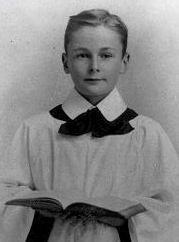 Newton
Neville Cossitt (b August 31, 1902 Brockville, Ontario, Canada,
d April 2, 1965 Stamford, Connecticut) If there is one thing my
siblings and cousins remember most about our Grandfather, it was
gathering around him to listen to stories about our ancestors. My
Grandfather sure could spin a yarn and we couldn't always tell if the
sole purpose of some of his details wasn't purely for our enjoyment.
One of the most memorable stories he told was of the Brockville Skating
Rink which was constructed in 1903 by his Grandfather Newton Cossitt Sr.
It was managed by his father Leonard Randles Cossitt. The Cossitt
skating rink stood at the corner of Broad and Water streets and was
considered one of the finest rinks in the province. The building
had over 14,000 square feet of floor space and a high arched roof which
ensured good pure air, no matter how large the crowds. The
interior was surrounded by a gallery for easy viewing of the many events
taking place there. There was ice skating in the winter, and
roller-skating and carnivals through the summer and to add to the
pleasure of the skaters, there was a band in attendance every evening.
As a young boy, Newton often attended social events at the rink with his
family and recalled simpler times when the citizens of Brockville came
together to celebrate. The rink was destroyed by fire in April of
1913 and about five years later his family left Brockville because his
father was offered a position with the Toronto Skating Club. (Submitted
by Cam Cossitt)
Newton
Neville Cossitt (b August 31, 1902 Brockville, Ontario, Canada,
d April 2, 1965 Stamford, Connecticut) If there is one thing my
siblings and cousins remember most about our Grandfather, it was
gathering around him to listen to stories about our ancestors. My
Grandfather sure could spin a yarn and we couldn't always tell if the
sole purpose of some of his details wasn't purely for our enjoyment.
One of the most memorable stories he told was of the Brockville Skating
Rink which was constructed in 1903 by his Grandfather Newton Cossitt Sr.
It was managed by his father Leonard Randles Cossitt. The Cossitt
skating rink stood at the corner of Broad and Water streets and was
considered one of the finest rinks in the province. The building
had over 14,000 square feet of floor space and a high arched roof which
ensured good pure air, no matter how large the crowds. The
interior was surrounded by a gallery for easy viewing of the many events
taking place there. There was ice skating in the winter, and
roller-skating and carnivals through the summer and to add to the
pleasure of the skaters, there was a band in attendance every evening.
As a young boy, Newton often attended social events at the rink with his
family and recalled simpler times when the citizens of Brockville came
together to celebrate. The rink was destroyed by fire in April of
1913 and about five years later his family left Brockville because his
father was offered a position with the Toronto Skating Club. (Submitted
by Cam Cossitt)
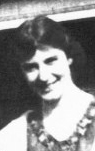
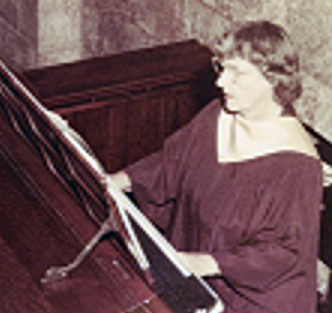 Jennie Beatrice Cossitt (b November 28, 1899
Beamsville, Ontario, Canada, d January 2, 1997 Houston, Texas) Jennie was the youngest child and only daughter of Newton Cossitt Jr. and Mary Jane Barkley. She was born in
Beamsville, Ontario and lived on a 93 acre fruit farm which her family
purchased in 1898. Jennie always had a love for music and when she
was a young girl and visited her Grandfather and Grandmother in
Brockville, they would gather in the parlor and play the organ and sing
hymns. Music was a passion shared by her entire family.
Jennie showed much promise and from an early age studied music at the
Hamilton Conservatory. At the age of fifteen, she was an organist
and a choir director at the Knox Presbyterian Church in Beamsville.
The year she graduated from high school she gave a solo piano recital at
the Hamilton Conservatory and one at Massey Hall in Toronto. After
saving a $1,000. earned mostly from piano teaching, she set off for
Rochester, New York in 1926 and after an audition was awarded a
scholarship at the Eastman School of Music. In 1930, with a
Bachelor of Music degree in both piano and organ, and a Master's in
musicology, she accepted a position in New York City, building a music
department at Union Settlement. While in New York she also gave
lectures on Community Music at the Julliard School of Music, and taught
a series of classes in Group Music at the Turtle Bay Music School.
After many years there, she moved to a similar position in Houston,
Texas. Another move took her to California as an organist and
teacher. Then finally after many honors given during her
distinguished career, Jennie retired from active teaching and retuned to
Houston to spend time with family. (Submitted by Campbell D.
Cossitt)
Jennie Beatrice Cossitt (b November 28, 1899
Beamsville, Ontario, Canada, d January 2, 1997 Houston, Texas) Jennie was the youngest child and only daughter of Newton Cossitt Jr. and Mary Jane Barkley. She was born in
Beamsville, Ontario and lived on a 93 acre fruit farm which her family
purchased in 1898. Jennie always had a love for music and when she
was a young girl and visited her Grandfather and Grandmother in
Brockville, they would gather in the parlor and play the organ and sing
hymns. Music was a passion shared by her entire family.
Jennie showed much promise and from an early age studied music at the
Hamilton Conservatory. At the age of fifteen, she was an organist
and a choir director at the Knox Presbyterian Church in Beamsville.
The year she graduated from high school she gave a solo piano recital at
the Hamilton Conservatory and one at Massey Hall in Toronto. After
saving a $1,000. earned mostly from piano teaching, she set off for
Rochester, New York in 1926 and after an audition was awarded a
scholarship at the Eastman School of Music. In 1930, with a
Bachelor of Music degree in both piano and organ, and a Master's in
musicology, she accepted a position in New York City, building a music
department at Union Settlement. While in New York she also gave
lectures on Community Music at the Julliard School of Music, and taught
a series of classes in Group Music at the Turtle Bay Music School.
After many years there, she moved to a similar position in Houston,
Texas. Another move took her to California as an organist and
teacher. Then finally after many honors given during her
distinguished career, Jennie retired from active teaching and retuned to
Houston to spend time with family. (Submitted by Campbell D.
Cossitt)
 Bertha Allshouse (b January 4, 1898 East Granby,
Hartford County, Connecticut, d June 21, 1994 Barkhamsted, Connecticut)
She graduated from Hartford High School and was a bookkeeper in Hartford
prior to her retirement in the late 1930's. As a tribute to her
late husband, Stanley K. Dimock, she donated 109 acres for a nature
preserve and animal refuge in Barkhamsted for educational and aesthetic
purposes. She was the Great Granddaughter of Permelia Monimia
Cossitt who was born in July, 1823. Bertha hosted the August 19,
1978 Cossitt Family Reunion in Granby, East Hartford, Connecticut.
Bertha Allshouse (b January 4, 1898 East Granby,
Hartford County, Connecticut, d June 21, 1994 Barkhamsted, Connecticut)
She graduated from Hartford High School and was a bookkeeper in Hartford
prior to her retirement in the late 1930's. As a tribute to her
late husband, Stanley K. Dimock, she donated 109 acres for a nature
preserve and animal refuge in Barkhamsted for educational and aesthetic
purposes. She was the Great Granddaughter of Permelia Monimia
Cossitt who was born in July, 1823. Bertha hosted the August 19,
1978 Cossitt Family Reunion in Granby, East Hartford, Connecticut.
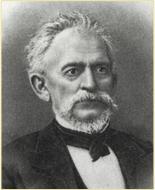
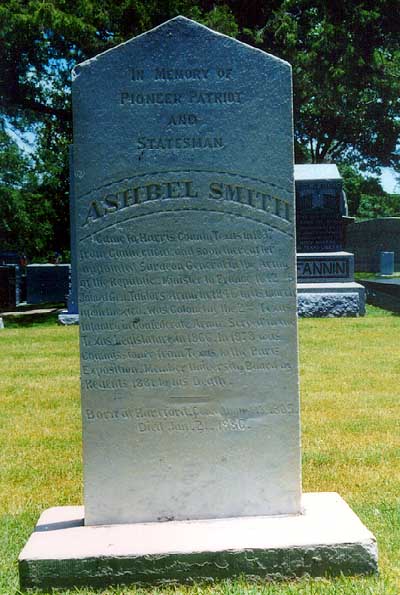 Dr.
Ashbel Smith (b August 13, 1805 Hartford, Connecticut, d
January 21, 1886) Dr. Smith was the son of Phoebe Adams and Moses
Smith of Hartford and the grandson of Rosanna Cossitt and Captain Abel
Adams. He graduated from Yale College in 1824, studied law for one
year and gave that up for the study of medicine. After graduating
from Yale Medical School, he went to Paris, France to acquire a more
comprehensive knowledge of surgery and the treatment of diseases.
In June of 1837 he moved to Texas where he was appointed Surgeon General
of the Texas Army. In 1838 he helped effect a treaty with the
Comanche Indians. He then resigned his Surgeon-General position
and settled in Galveston where he resumed the practice of medicine.
In October 1839 there was a yellow fever epidemic and he was so
successful in combating it, he became distinguished and wrote treatises
that were printed in medical journals in both America and Europe.
In 1842, Texas President Sam Houston appointed him as Minister to France
and Great Britain. He settled many difficulties and helped establish
peace between Texas and Mexico. This peace helped make annexation
of Texas more favorable to The United States. During the Civil War
he fought with Texas on the Confederate side and was wounded at Shilo.
As part of peace negotiations, Smith helped negotiate peace terms for
Texas with Union officials in New Orleans. He helped found the
University of Texas in Austin and served as the University's first
President and member of the Board of Regents. He also became a
legislator in Texas. He never married or had any children. (Submitted
by Sam Ybarra)
Dr.
Ashbel Smith (b August 13, 1805 Hartford, Connecticut, d
January 21, 1886) Dr. Smith was the son of Phoebe Adams and Moses
Smith of Hartford and the grandson of Rosanna Cossitt and Captain Abel
Adams. He graduated from Yale College in 1824, studied law for one
year and gave that up for the study of medicine. After graduating
from Yale Medical School, he went to Paris, France to acquire a more
comprehensive knowledge of surgery and the treatment of diseases.
In June of 1837 he moved to Texas where he was appointed Surgeon General
of the Texas Army. In 1838 he helped effect a treaty with the
Comanche Indians. He then resigned his Surgeon-General position
and settled in Galveston where he resumed the practice of medicine.
In October 1839 there was a yellow fever epidemic and he was so
successful in combating it, he became distinguished and wrote treatises
that were printed in medical journals in both America and Europe.
In 1842, Texas President Sam Houston appointed him as Minister to France
and Great Britain. He settled many difficulties and helped establish
peace between Texas and Mexico. This peace helped make annexation
of Texas more favorable to The United States. During the Civil War
he fought with Texas on the Confederate side and was wounded at Shilo.
As part of peace negotiations, Smith helped negotiate peace terms for
Texas with Union officials in New Orleans. He helped found the
University of Texas in Austin and served as the University's first
President and member of the Board of Regents. He also became a
legislator in Texas. He never married or had any children. (Submitted
by Sam Ybarra)